
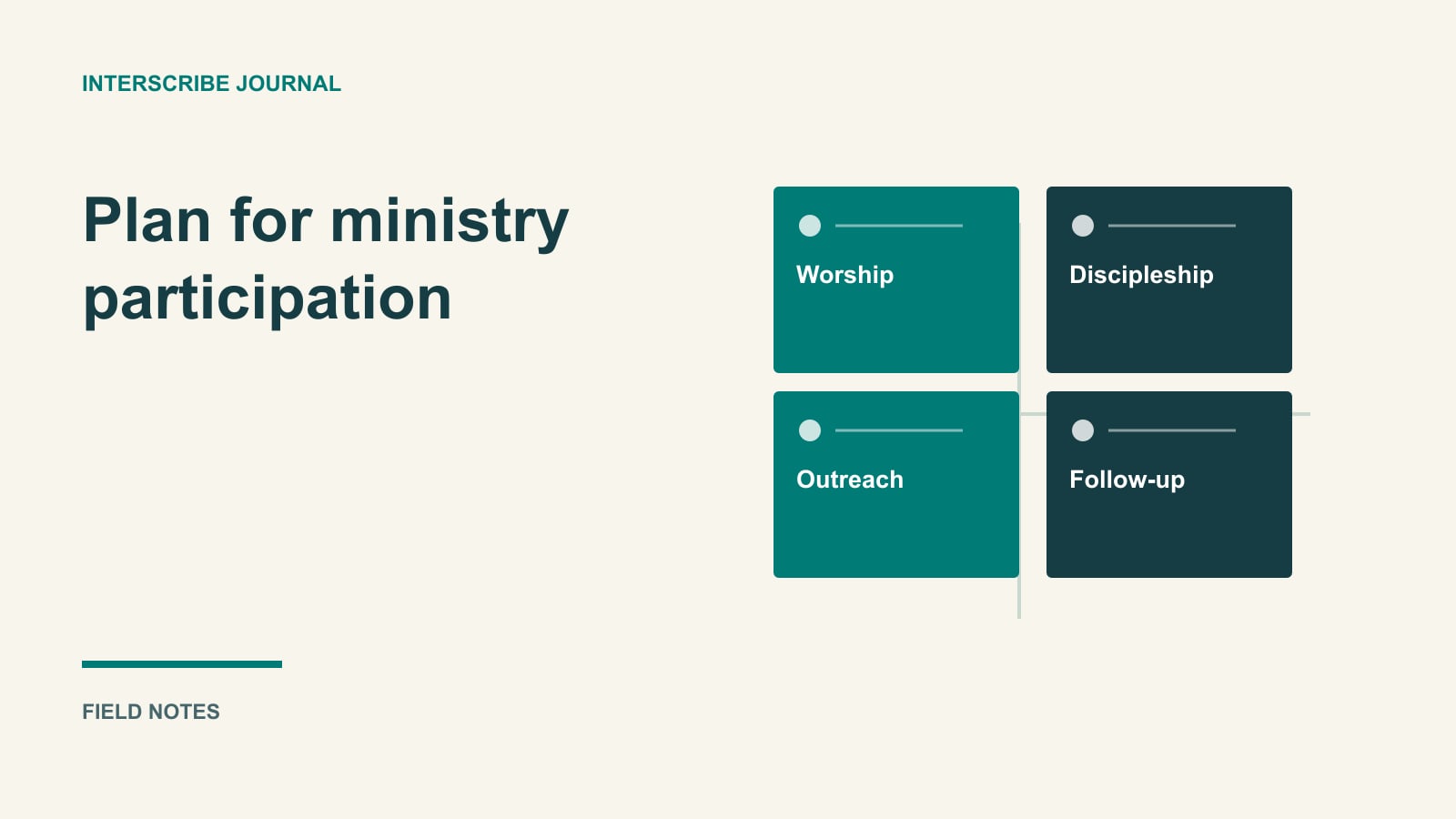
Begin with hospitality and understanding
A church may first notice a language need during a Sunday service: a visitor follows the music but struggles with the sermon, or a family asks how to join a small group. The useful next question is what would help those people participate in the life of the church.
Language support can be part of Christian hospitality, teaching and care. It is not a promise of attendance growth, a substitute for relationships or a reason to treat people as a demographic segment. This guide helps a ministry team turn direct requests into a small, workable plan across worship, discipleship and outreach.
Ask about the activity, not just the language
A person may prefer one language for reading Scripture and another for conversation. A family may want spoken interpretation during worship, translated joining instructions or a small group where questions can be discussed comfortably. Do not infer these preferences from a surname, nationality or neighborhood.
Invite requests in a welcoming, private way. Ask: “What would help you follow and take part?” Then discuss the activity, preferred format and a contact person. Collect only what the ministry team needs to arrange support, and avoid making a public list of individual needs.
Keep language access and individual accessibility arrangements connected but distinct. A translated text does not automatically meet a person's need for another format or service. Make it clear how someone can speak privately with the appropriate ministry contact.
A fictional quarterly ministry plan
Imagine a fictional church preparing its next quarter. Several households ask about Spanish support for Sunday teaching. Two people also ask for a way to discuss a discipleship course, and a community-meal volunteer notices that the joining instructions are difficult for some guests to understand.
The team initially considers translating every existing recording. After speaking with the people who made the requests, it chooses three smaller commitments: a rehearsed Sunday language-support pilot, a facilitated course discussion and reviewed meal instructions. The archive project remains a separate decision.
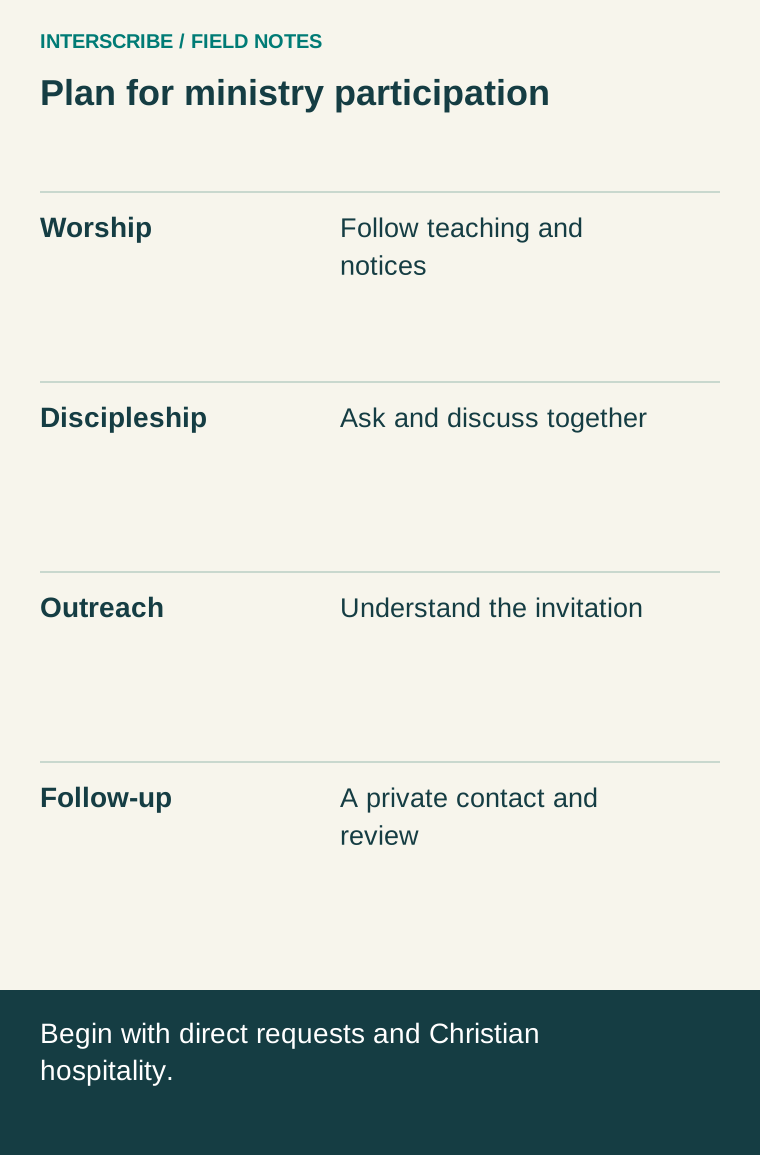
| Ministry activity | Request to address | Pilot arrangement | Named responsibility |
|---|---|---|---|
| Sunday teaching | Follow the sermon and announcements | Test the agreed live language format and joining instructions | Worship producer and language lead |
| Discipleship course | Ask questions and discuss the teaching | Prepare reviewed materials and a supported conversation | Course leader |
| Community meal | Understand arrival and participation instructions | Review a short invitation and welcome script | Outreach coordinator |
| Follow-up | Know whom to contact after trying the service | Offer a private feedback conversation | Pastoral or ministry contact |
These are fictional planning choices, not evidence that a church grew or that one format is appropriate for every congregation.
Prepare the message with care
Give the language team the planned Scripture references, names, sermon outline and unusual terms in advance, subject to the church's sharing arrangements. When a passage or quotation is important, identify the intended edition or wording and check any publication permissions that apply to the material you will distribute.
Ask a competent reviewer to check theological meaning and the language people will actually encounter. A glossary can help a team discuss terms; it does not guarantee that every live output will preserve the intended meaning. Give the speaker and reviewer a route to resolve ambiguity rather than asking the reviewer to guess.
Explain changes in the service order. A spontaneous testimony, an announcement or a prayer may introduce speakers and vocabulary absent from the sermon notes. Plan how the host will keep the language team informed and how unamplified speech will reach the source feed.
Design participation beyond the sermon
A Sunday text stream may help someone follow a talk while leaving the fellowship hour or small-group discussion unchanged. Map the places where people are expected to respond: introducing themselves, asking a question, volunteering or discussing Scripture.
For a small group, discuss turn-taking and the group's agreed language arrangement. Sending a transcript afterward does not give a participant a way to contribute during the conversation. The appropriate arrangement should follow the actual participants' needs and the competence of the people providing support.
For outreach, test the practical instructions as well as the message. Can a guest find the entrance, understand the timing and ask for help without navigating an unfamiliar process? A short, reviewed invitation may solve a more immediate problem than a large translated archive.
Rehearse the participant journey
Use a second device to follow the same instructions that a visitor will receive. Check the link or QR code, selected session, intended language and visible or audible output. Then test what happens when someone needs help.
The InterScribe first-event guide and language setup documentation describe the session and audience-language workflow. Treat them as preparation resources and verify the actual arrangement in your environment. Do not announce a language or service until the team has confirmed it can provide it.
Give volunteers a role they are prepared to carry. Someone who helps a visitor open a link does not thereby become qualified to interpret a pastoral conversation. Sensitive or consequential conversations need an appropriate arrangement, confidentiality and clear responsibility.
Copy this ministry planning sheet
| Field | What the team records |
|---|---|
| Activity and task | What the person wants to understand or participate in |
| Direct request | Preferred language and format, with private details kept separately |
| Arrangement | What will be provided and what still needs confirmation |
| Preparation | Materials, terminology and competent review owner |
| Rehearsal | Participant task, observed result and unresolved issue |
| Support | Person available during the activity and follow-up contact |
| Review date | When the team and participants will discuss the next step |
Keep the public invitation consistent with this sheet. If the pilot covers only the main teaching, say so clearly and explain how other requests can be raised.
Review belonging through conversation, not a growth claim
Ask participants whether they could follow the teaching, ask their questions and understand what happens next. Offer a private response route, including for people who tried the arrangement and did not return. Do not interpret silence as satisfaction.
Use attendance information cautiously and with its definitions intact. Many things affect whether someone attends a service; a change in attendance does not establish that language support caused it. The immediate decision is whether the arrangement served the people who asked for it and what needs repair.
A useful next-quarter plan has modest, clear commitments, prepared people and a listening relationship with participants. That makes language support part of ministry practice rather than a promise attached to an unsupported growth trend.